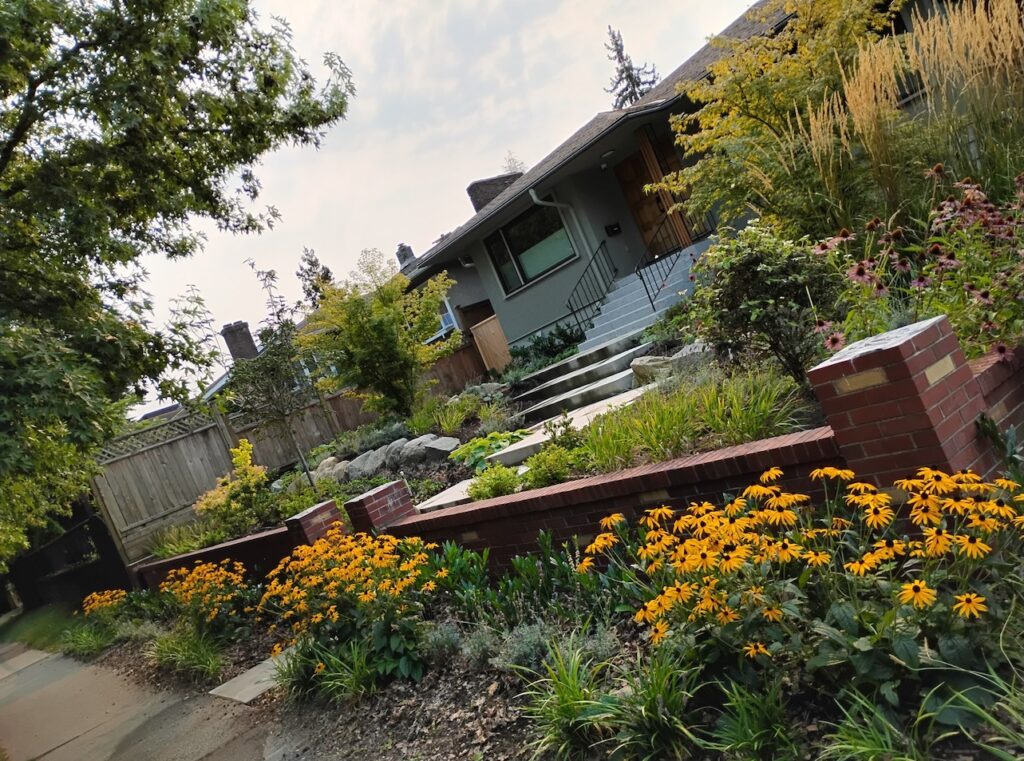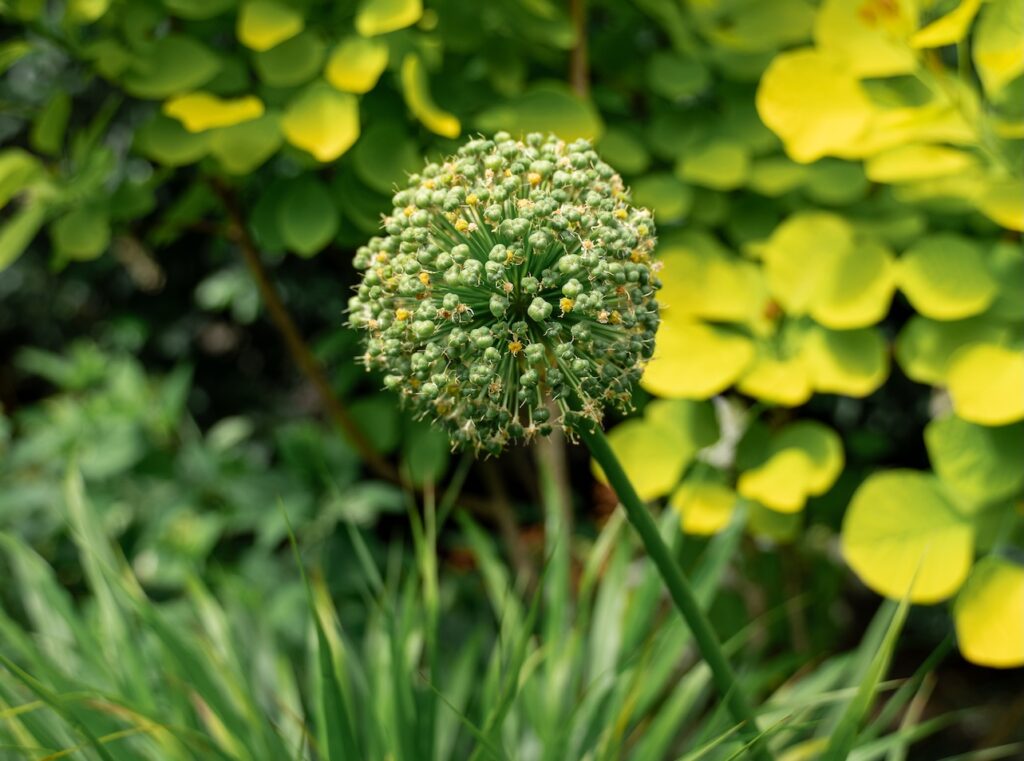
A finished garden brings together the structure of hedges and trees, the texture of ornamental grasses and perennials, and the open space of lawn or ground cover. What supports that garden is less visible: workable soil, considered levels, drainage and a carefully planned installation sequence.
For homeowners considering a complete garden installation in Vancouver, understanding those stages makes it easier to assess a proposal and prepare for the work. Whether the garden surrounds a new home or replaces tired planting, the aim is a landscape that suits the property and has room to mature.
What does a complete garden installation include?
The scope should be defined for the property. It may include removing unwanted planting, preparing beds, bringing in suitable soil, installing trees and privacy hedges, planting shrubs and perennials, and laying sod or establishing ground cover. Irrigation, lighting, paths and patios may also need coordination with the planting work.
Before installation, agree on the layout, plant schedule, sizes, quantities and materials. Identify what will be retained and who is responsible for each part of the work. A clear specification helps distinguish the finished appearance from the preparation required to support it.
If you are still deciding how to use the space, our front yard and backyard renovation planning guide explains how to develop priorities before moving into installation.
Assess the site before machinery arrives
The first stage is to understand the ground, access and existing features. Consider soil condition, drainage, sun and shade, slopes, retained trees and the relationship between garden beds and the house. Persistent wet areas need investigation before they are covered with new soil or lawn.
Plan delivery and working routes for machinery, soil and plants. Narrow side access, steps and limited staging space can affect the equipment and sequence needed. Locate underground services before digging, agree on protection for retained trees and surfaces, and identify any approvals required for the planned work.
Site preparation: establish levels, drainage and structure
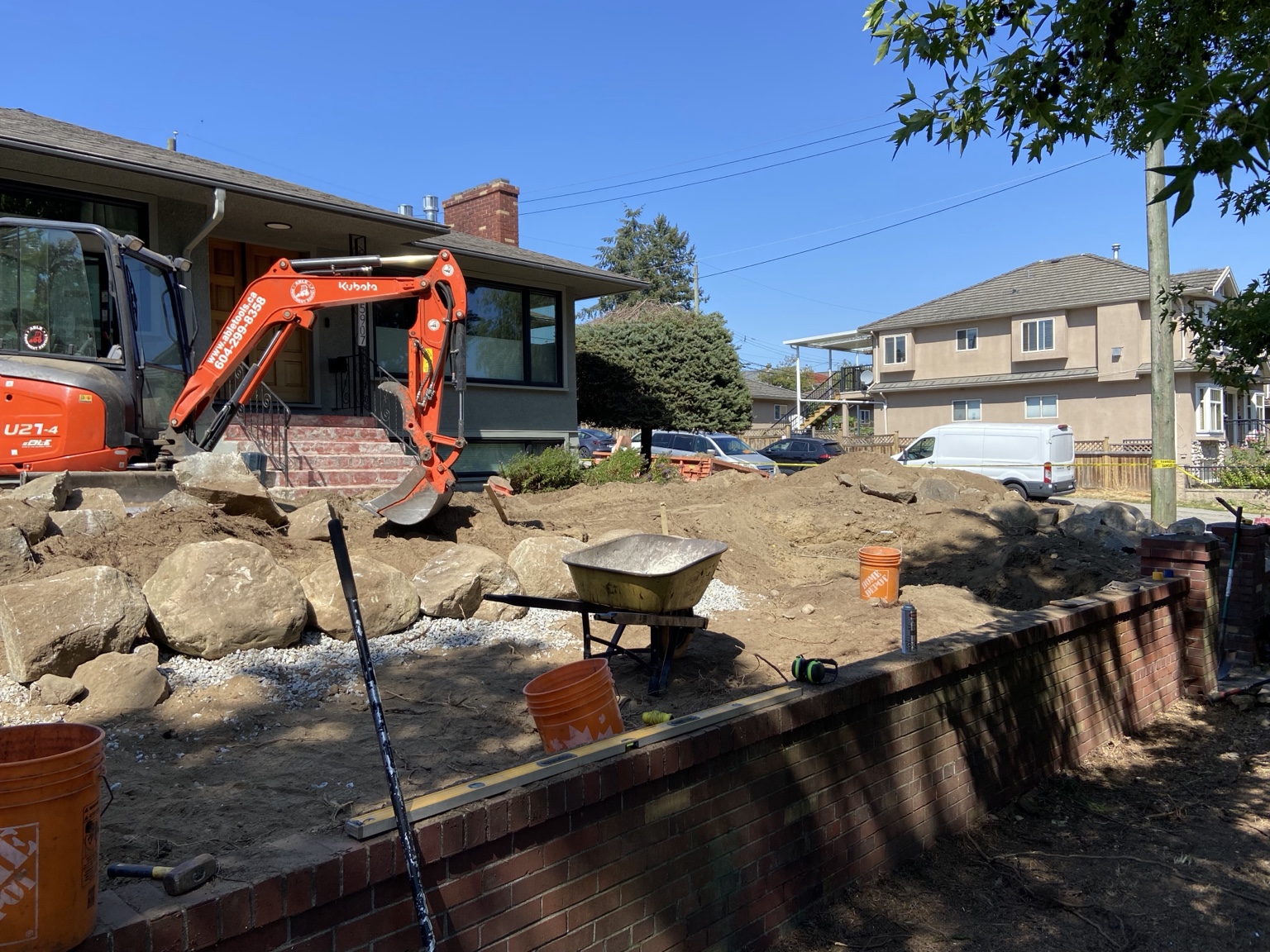
Preparation may involve removing unwanted vegetation, unsuitable fill and construction debris, followed by excavation and grading to the agreed design. The amount of work depends on the existing ground; adding a fresh layer of soil does not resolve every underlying problem.
Finished levels should work with entrances, hard surfaces and drainage, while respecting the needs of retained trees. Avoid raising soil against trunks or building details. Where drainage work is needed, establish how water will be managed before planting begins. A gravel layer alone is not a substitute for a drainage plan.
Boulders, steps and other heavy landscape elements generally need to be positioned while suitable machinery access is still available. The aim is to complete disruptive work before the more delicate planting and finishing stages.
Prepare soil for the planting it will support
Soil preparation should respond to what is already present and what you intend to grow. Assess compaction, drainage and soil condition, using testing where it will help determine amendments. Existing soil may be improved and retained; other areas may require suitable imported growing medium.
Cultivate or loosen the planting area as appropriate without damaging retained roots or services, and avoid working soil when it is too wet. Choose soil suited to its purpose rather than treating every blend as interchangeable. Lawn, garden beds and containers can have different requirements.
Compost can help improve soil, but the right amount depends on the material and existing conditions. Fertiliser should also have a reason behind it. More amendment does not automatically produce healthier plants, and a planting hole should not become an isolated pocket of very different soil surrounded by poorly draining ground.
Select plants for the actual conditions
A planting plan should consider light, moisture, drainage, exposure and mature size. The same property may have a sunny border, a shaded side passage and a dry area sheltered beneath eaves. Choose plants for those conditions and for the care the homeowner can sustain.
Trees and hedges establish the main framework. Shrubs, grasses and perennials add layers of foliage, flowers and seasonal change. Native plants and suitable introduced species can both have a place; species and cultivars differ in mature size, water needs and tolerance of shade.
Plant size affects the initial appearance, handling and establishment care. Mature screening can create privacy sooner, but needs sufficient root space, access for delivery and a realistic maintenance plan. Allow for future growth beside paths, windows and neighbouring planting.
Set out and plant with care
Set plants out on site before digging so spacing and sightlines can be reviewed against the plan. Check plant quality and root condition, and keep rootballs from drying out while waiting to plant.
Plant at the appropriate depth for the species and growing form. For trees and shrubs, identify the root flare rather than relying only on the nursery soil level, and avoid burying the trunk. Prepare a hole that accommodates the roots, address circling roots appropriately, and firm the backfill without excessive compaction. Water thoroughly after planting and check that the rootball is receiving moisture.
Staking or support should be used where needed and reviewed as the plant establishes. With large specimens, lifting and placement require suitable equipment and a planned approach.
Coordinate lawn, irrigation and finishing
Decide where lawn will be useful and where planting or ground cover may be more suitable. Deep shade, repeated wear and wet ground can limit lawn performance. Prepare and settle the soil, refine the levels and install sod onto a suitable surface, with close attention to edges and adjoining beds.
Coordinate irrigation with the planting layout so different areas can receive appropriate watering. Check coverage and operation at handover. Mulch suitable beds to help conserve moisture and suppress weeds, keeping it clear of trunks and plant crowns. Mulch reduces maintenance demands but does not remove the need for weeding.
A coordinated installation in Forest Hills
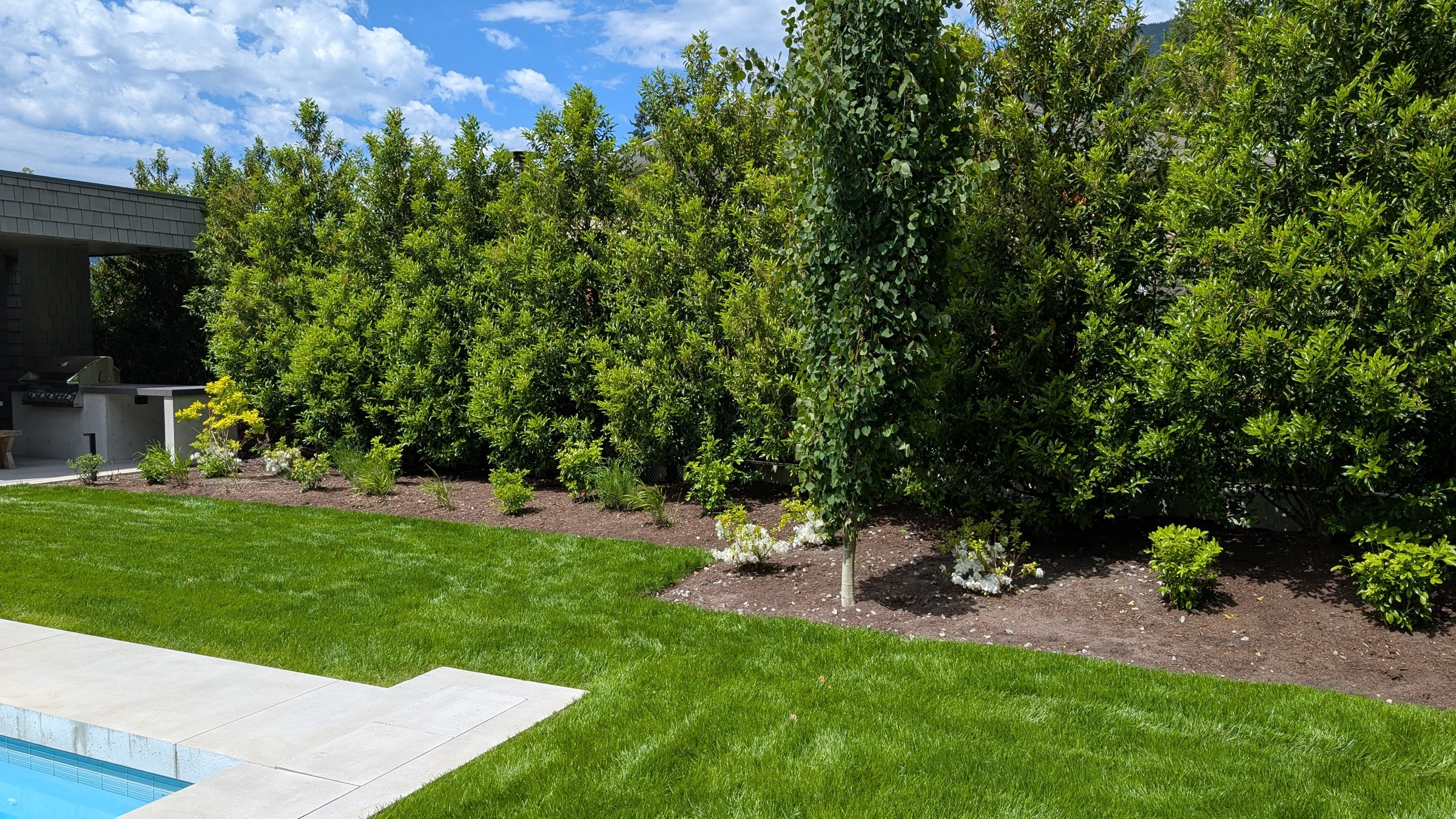
Our Forest Hills garden installation in North Vancouver brought together mature Portuguese laurel screening, layered planting, new lawn and fibreglass planters around a new home. Garden design was by John Minti Design and the builder was GemLevy Projects.
EcoBridge coordinated installation around narrow side access and other trades. Soil movement, grading, deliveries and the placement of mature plants all needed to be considered together. The finished garden shows the result of that preparation; our involvement continues through ongoing garden maintenance.
Establishment is part of the installation plan
A newly installed garden needs monitoring while roots develop into the surrounding soil. Watering should respond to the plants, soil and weather, with attention to moisture within the rootball as well as the surrounding ground. Both prolonged saturation and drying out can cause problems. Rainfall alone may not wet sheltered planting adequately.
Ask for a handover covering watering, irrigation operation, new lawn care, seasonal pruning and any follow-up visits. Climate-adapted and drought-tolerant plants still need establishment care. Larger specimens may need watering and monitoring for longer than smaller plants.
Regular care helps preserve the intended form of a hedge, the definition of bed edges and the balance between neighbouring plants. Discuss the ongoing garden care the planting will need alongside the installation proposal.
Discuss your garden installation
EcoBridge provides garden design, planting and sod installation, with landscape construction where paths, patios or other structural elements form part of the project.
For a complete garden installation in Vancouver, North Vancouver or West Vancouver, arrange a consultation with EcoBridge. Share your property location, photographs and the changes you have in mind so we can discuss the preparation, planting and care appropriate for your garden.