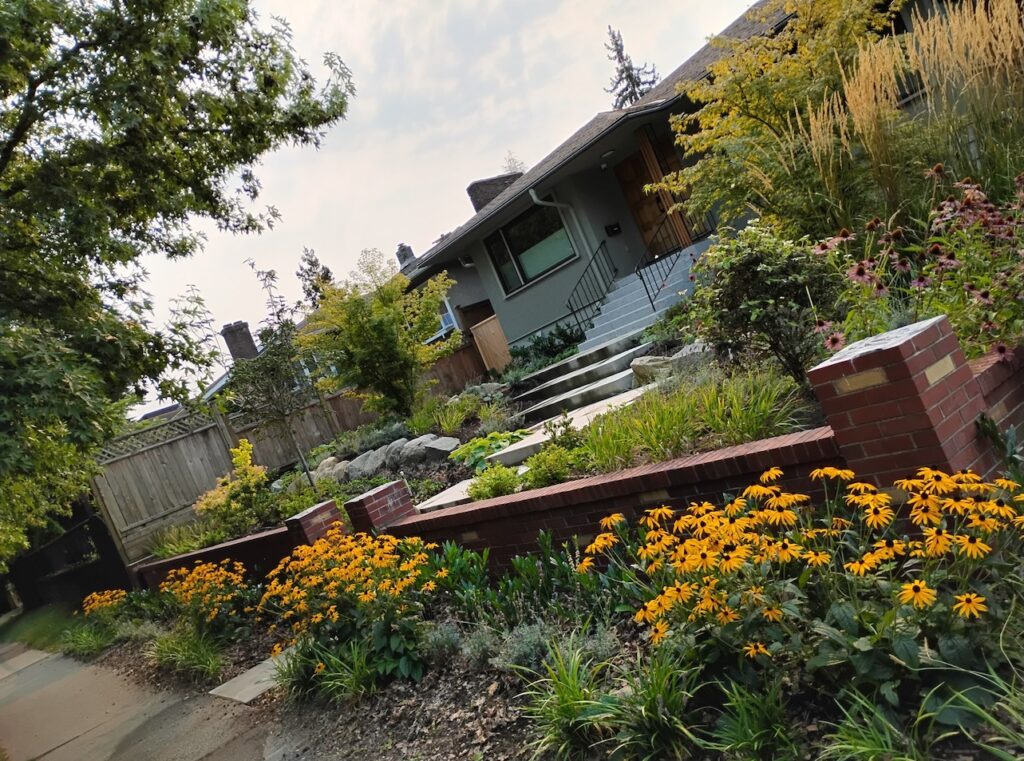
A natural stone patio can give a garden a comfortable place to gather, while a well-planned path makes the journey from the street to the front door feel considered. The character comes from the stone; lasting performance depends on the ground preparation, drainage and finishing beneath and between it.
If you are planning a backyard renovation or front yard renovation in Vancouver, North Vancouver or West Vancouver, flagstone is worth considering. This guide explains the choices that matter before construction begins, including where permeable construction can help and what maintenance to expect.
What is flagstone?
Flagstone describes paving stone supplied in relatively flat pieces, rather than one particular rock type. It may be irregular in outline or cut into more regular shapes. Colour, surface texture, thickness and durability vary with the stone and finish selected.
Irregular pieces can create a relaxed garden path or a patio with a carefully fitted pattern. Cut stone can suit a more formal layout. View actual samples beside your home, ideally wet and dry, and ask the supplier whether the specific material is suitable for exterior paving in local conditions.
Start with how you will use the space
For a patio, plan around your furniture and the way people will move through the garden. Allow space to pull out dining chairs, walk past seating and reach doors without squeezing between furniture and planting. Mark the proposed outline on site before settling on its size.
For a front path, consider everyday use: carrying groceries, moving bins, pushing a stroller and meeting another person. Steps, lighting, landings and transitions at the driveway or entrance should be considered together. If someone uses a wheelchair or mobility aid, discuss that at the design stage. Accessibility depends on the completed route, including its width, slopes, surface evenness and joints; it is not an automatic property of flagstone.
During a complete garden installation, coordinate the paving with planting beds, irrigation and lighting routes. Installing sleeves or other planned services before the finished stone is laid can avoid unnecessary disturbance later.
Choose stone for the setting and the walking surface
A stone that looks beautiful in a sample may behave differently on a shaded, wet path. Ask about exterior suitability, resistance to weathering, the finish underfoot and the thickness required for the proposed installation. Natural texture does not make every stone slip-proof. Moss, algae, leaves and ice can make outdoor paving slippery.
Stone size and joint width also affect comfort. Large, well-supported pieces with controlled changes in height can provide a more comfortable route than widely spaced stepping stones. Review these details with the installer, especially at entrances and other frequently used areas.
Plan drainage before choosing the finished level
The first drainage question is where water will go. Existing grades, roof runoff, soil conditions, nearby foundations and low spots all influence the design. A patio should not direct runoff towards the house or neighbouring property. Finished elevations also need to respect door thresholds and existing building details.
Permeable jointing can allow water to pass between the stones, but it does not make the whole installation drain well on its own. The bedding, base and underlying ground must be considered as a system. Where the soil cannot absorb water adequately, a suitable drainage outlet or another drainage approach may be needed.
Permeable construction is not a promise that a property will never flood, and jointing mortar does not automatically replace drains. Significant slopes, persistent pooling or work close to foundations may require advice from a drainage specialist or other qualified professional.
The foundation beneath a natural stone patio
A reliable installation begins with assessing the ground and removing unsuitable material. Excavation depth and aggregate thickness depend on soil strength, drainage, stone thickness, expected use and the selected construction system. A single depth recommendation cannot cover every garden, and a pedestrian patio detail should not be assumed suitable for vehicle loads.
Base preparation, appropriate separation where needed, compaction and edge restraint help support the finished paving. The stones must be properly supported and set to the planned falls, with attention to uneven edges and transitions. Depending on the project, the specification may call for an aggregate bedding system or a compatible bonded drainage mortar assembly.
EcoBridge’s documented oceanside limestone patio project in West Vancouver illustrates a project-specific approach. Logical Landscape brought EcoBridge in for its experience with ROMEX products. The published project account records a crushed-rock base, TRASS BED drainage bedding mortar, a bonding product beneath the limestone and jointing mortar. That is an example of a coordinated assembly, rather than a specification to copy onto every property.
Joints are part of the construction system
Joint width, depth, stone stability and the bedding method all influence the appropriate jointing material. A compatible permeable mortar can create a defined finish while allowing water through the joints. It cannot compensate for loose stones, inadequate support or an unsuitable base.

Product instructions differ. Mixing, surface preparation, application temperatures, rain protection and curing time should follow the current technical data for the exact product. Weather and the chosen material affect when the paving can be used.

What maintenance should you expect?
Natural stone paving still needs care. Sweep away leaves and soil, keep drainage paths clear, and address moss or algae with a method appropriate for the stone and jointing. Check periodically for loose stones, damaged joints and changes in level.
Use compatible cleaners and follow the supplier’s guidance before pressure washing or sealing. Aggressive cleaning can damage some surfaces and joints. Bound joints can reduce opportunities for weeds to establish within them, but accumulated organic material on top can still support growth. A well-built patio should be practical to care for; regular care helps preserve its appearance and performance.
What affects the cost and scope?
The main variables include area, access for excavation and material delivery, disposal, ground conditions, drainage work, stone selection, cutting and fitting, steps and edge details. Ask proposals to describe the preparation and drainage as well as the visible finish. For an existing patio, an assessment should establish whether it needs joint repairs, resetting or a more complete rebuild.
Plan your patio as part of the garden
EcoBridge provides landscape construction, including patios and pathways, together with garden design, planting and sod installation. Planning these elements together helps the paving connect naturally with the home and surrounding garden.
For a natural stone patio, front path or wider landscape installation in Vancouver, North Vancouver or West Vancouver, contact EcoBridge to arrange a consultation. Share photographs, the property location and how you would like to use the space so we can discuss the site and an appropriate next step.